No-Panic Declutter Toolkit: 10–20 Minute Room Resets
The No-Panic Declutter Toolkit: Digital Downloads for Calm and Clear Living Spaces
A calm home usually starts with a simple plan that reduces decision fatigue and keeps momentum going. This digital toolkit is designed to guide quick wins, room-by-room progress, and gentle routines—without turning decluttering into an all-day project. If clutter makes it harder to focus, you’re not imagining it; research has linked visual clutter with reduced attention and task performance (Princeton University).
What the toolkit is and what it helps solve
The No-Panic Declutter Toolkit is a set of digital downloads meant to turn overwhelming clutter into a clear, step-by-step path. Instead of asking you to “get organized” in one big push, it lowers friction by giving you fewer decisions, clear next actions, and fast “done” moments.
- Helps with delayed decisions by giving you a consistent order of operations.
- Breaks “piles without a home” into simple relocation steps.
- Reduces overflowing “misc” zones by focusing on containers and category limits.
- Fits busy schedules through short, repeatable sessions rather than marathon cleanouts.
Because stress can show up physically and mentally, building an easier home routine can be a supportive layer alongside other coping skills (American Psychological Association).
Toolkit at a glance
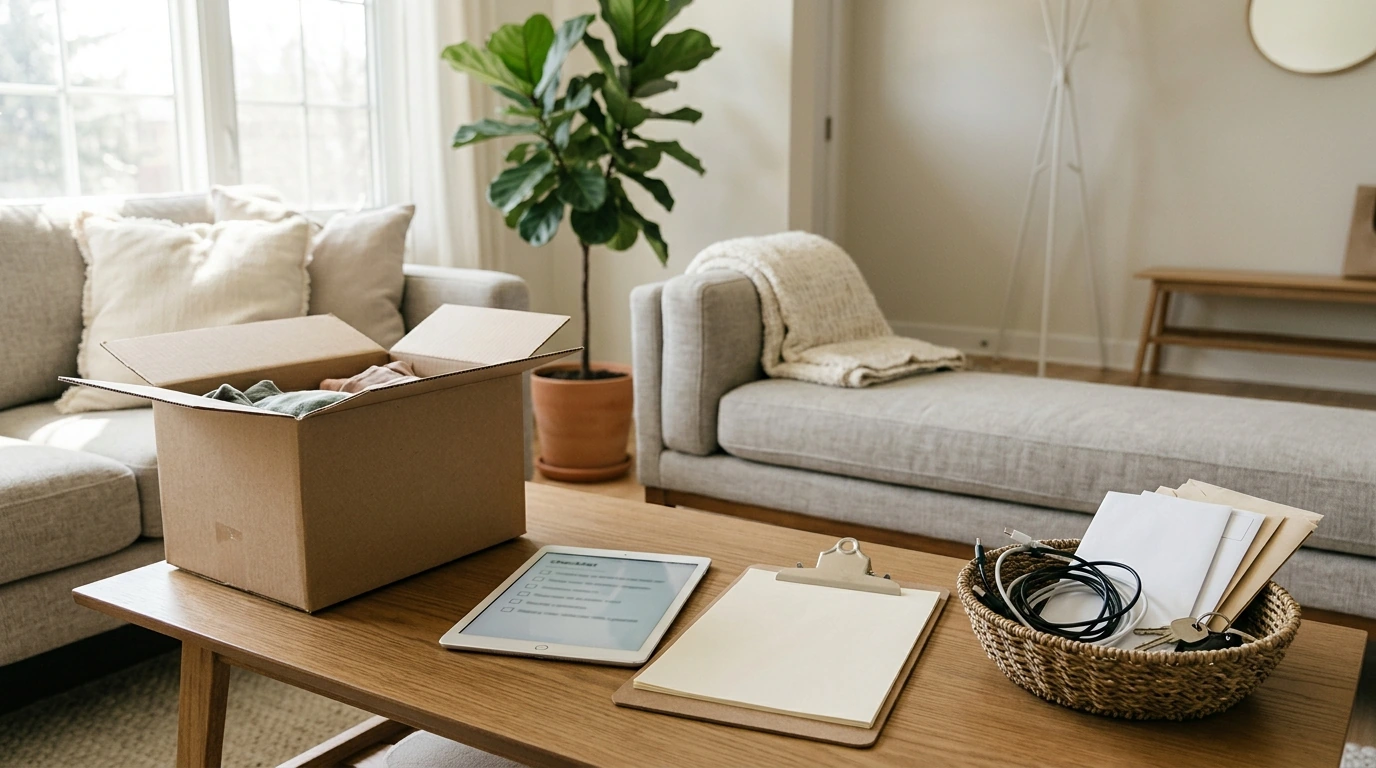
Use the pieces together for a guided reset, or grab a single worksheet to tackle one problem area. The best results usually come from pairing a small time block (10–20 minutes) with a clear keep/toss/donate/relocate flow. You can keep printed pages in a clipboard or binder, or use a tablet with a note-taking app.
Common toolkit elements and how they fit together
| Element | What it supports | Best time to use it |
|---|---|---|
| Quick-start checklist | Immediate momentum and reduced overthinking | First day or whenever motivation is low |
| Room or zone plan | Turns a whole room into small, finishable zones | Before starting a new space |
| Donation/exit plan | Prevents bags from lingering and re-cluttering | During each session; finalize weekly |
| Storage and “home” prompts | Helps assign a clear place for frequently used items | After removing obvious clutter |
| Maintenance routine | Keeps gains without big weekend resets | After the first full pass through key rooms |
How the no-panic approach keeps things manageable
- Start with visible surfaces for quick relief: countertops, coffee table, entry drop zone.
- Work in short sessions (10–20 minutes) to avoid burnout and make starting easier.
- Decide in a fixed order: trash → donate → relocate → keep, so you don’t stall out.
- Use a “container limit” for tough categories (paper, cables, sentimental items) to prevent endless sorting.
- End with a two-minute reset so the room looks better when you stop than when you started.
This structure matters because when anxiety or stress is running high, simplifying the next step can make action feel more doable (Cleveland Clinic).
Who it’s a good fit for (and when it may not be)
- Great for: renters and homeowners, families managing shared spaces, students, and anyone restarting after a busy season.
- Helpful for: people who want a plan but prefer flexibility over strict minimalism rules.
- May not be enough alone for: severe hoarding disorder or situations requiring clinical support—consider professional help in addition to any toolkit.
- Works especially well when paired with: a simple “one in, one out” rule after the first declutter pass.
Simple setup: printing, organizing, and using digital pages
- Printing: Use standard letter size, select grayscale to save ink, and print only the pages you’ll use this week.
- Binder method: Keep one section for “active room” pages and another for “maintenance” so the binder stays clean and useful.
- Digital method: Import PDFs into a note app (where supported), duplicate pages for repeated weekly use, and keep a “Today” shortcut for checklists.
- Supplies station: One donation bag/box, one trash bag, and a “relocate bin” for items that belong elsewhere.
A small supplies station reduces the tiny interruptions that derail short sessions. When the donation bag and relocate bin are already in place, starting takes seconds instead of minutes.
A practical room-by-room flow that prevents backtracking
Keeping the calm: maintenance that doesn’t take over weekends
Helpful digital downloads to pair with your reset
- The No-Panic Declutter Toolkit: Digital Downloads for Calm and Clear Living Spaces
- Content That Sells Strategy Toolkit | How to Create a Content Marketing Strategy 3-in-1 Bundle
- Grow Your Business Step-by-Step: 10-in-1 Bundle for Online Success
FAQ
How fast can results show up with short decluttering sessions?
Visible wins can happen in 10–20 minutes when you target surfaces, a single drawer, or one small zone. The real change comes from consistency: five short sessions in a week often clears more than one exhausting “someday” cleanout.
Do digital declutter toolkits work without printing?
Yes—PDFs can be used on a phone or tablet, and checklists can be recreated in a notes app for quick tap-to-check progress. The key is still having a simple physical setup nearby (trash, donation bag, and a relocate bin) so the actions match the plan.
What if more clutter keeps coming in?
Use a temporary intake pause where possible, and designate one “incoming items” bin so new stuff doesn’t spread. Pair that with a weekly return/donation routine to prevent backlog and keep your cleared spaces from refilling.












Leave a comment