Homework Help Made Easy: Parent Toolkit for Routines
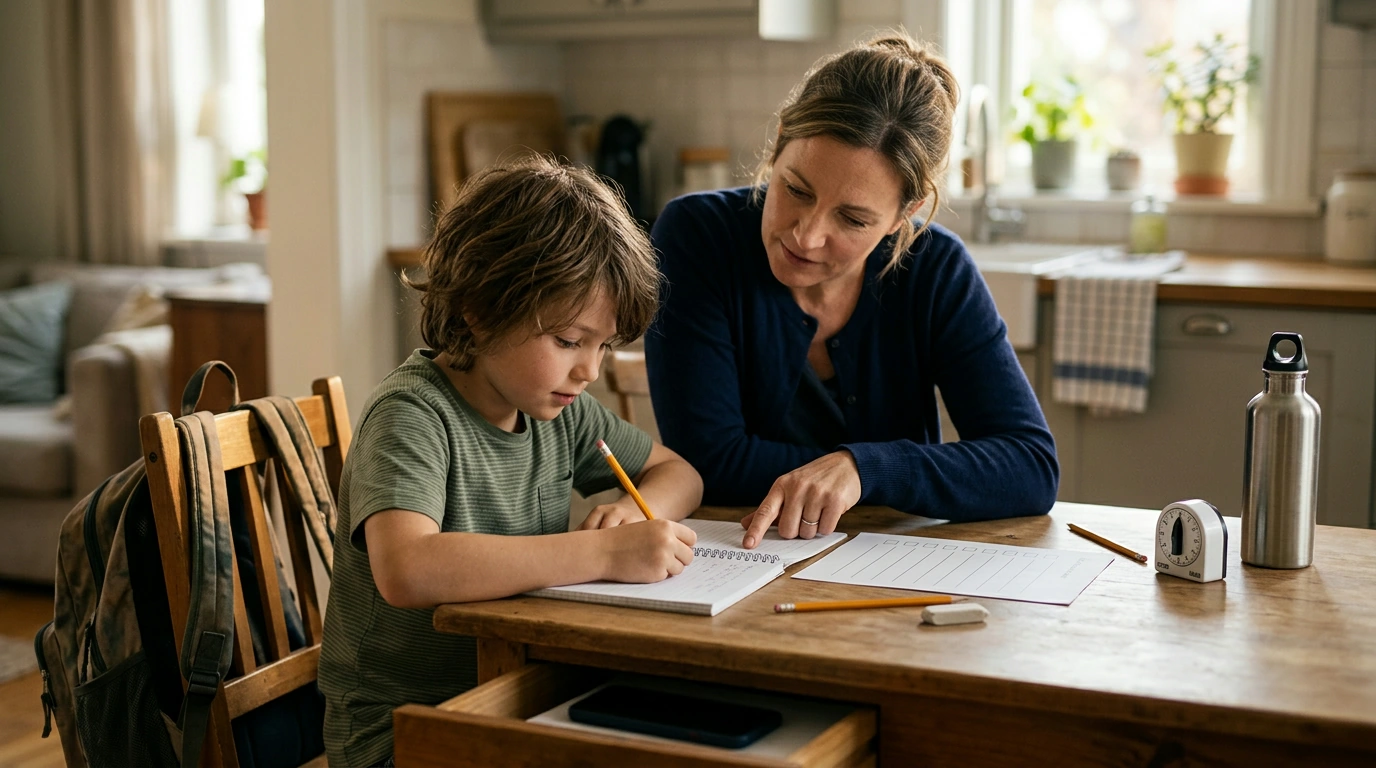
Homework Help Made Easy: A Parent Toolkit for Study Habits, Homework Routines, and Independent Learning
A consistent homework routine reduces daily friction, builds confidence, and helps kids practice skills without constant reminders. A parent-friendly “toolkit” approach focuses on simple systems—space, time, expectations, and gradual independence—so homework becomes more predictable and less stressful. When the process is steady, kids spend less energy resisting and more energy learning.
Why Homework Becomes a Daily Struggle (and What Actually Helps)
Most homework blowups aren’t about ability. They’re usually about conditions that make it harder to start, stay focused, or finish with confidence.
- Unclear directions: Kids may not understand what the teacher expects—or how much is enough.
- Procrastination: Starting feels overwhelming, so they delay.
- After-school fatigue: Self-control and attention are lowest right when homework begins.
- Perfectionism: Fear of being wrong turns into avoidance or tears.
- Distractions: Phones, tabs, siblings, and background noise steal momentum.
The most effective parent role often shifts from “fixing” to “coaching.” Structure does the heavy lifting: a predictable start, a visible checklist, and short reset breaks. Small wins compound quickly—especially when your child can feel success within the first 10 minutes.
Set Up the Homework Environment: Fewer Distractions, More Momentum
Your setup should make the “right choice” the easy choice. Aim for a consistent spot that signals, “This is where schoolwork happens.”
- Pick one main location: good light, comfortable chair, and a clear surface.
- Keep supplies within reach: pencils, erasers, paper, calculator, headphones, chargers—so there are fewer “escape” trips.
- Create a distraction plan: phone outside the room (or in a drawer), website blockers if needed, and a single tab/device rule for online assignments.
- Use a simple start-up ritual: water bottle filled, materials out, assignment list written, timer set.
For guidance on healthy study habits and age-appropriate expectations, families can also reference resources from HealthyChildren.org (American Academy of Pediatrics).
A Routine That Sticks: Time Blocks, Breaks, and a Clear Finish Line
The goal isn’t a rigid schedule—it’s a repeatable rhythm your child can predict. Tie homework to an existing anchor (snack, a short decompression window, or after practice) and keep the start time consistent most days.
- Use attention-friendly blocks: many kids do well with 15–25 minutes of work followed by 3–5 minutes of break.
- Define “done” clearly: completed, checked, packed, and submitted (or ready to submit).
- End with a two-minute review: confirm due dates, pack materials, and preview tomorrow.
Sample After-School Homework Routine (Adjust by Age and Schedule)
| Time | What Happens | Parent Role | Goal |
|---|---|---|---|
| 3:30–4:00 | Snack + decompress | Warm check-in, no problem-solving yet | Lower stress; transition from school |
| 4:00–4:05 | Plan the list (write tasks + due dates) | Ask: “What’s first? What’s hardest?” | Clarity and prioritization |
| 4:05–4:30 | Work block 1 (hardest task first) | Stay nearby, prompt with questions | Momentum on challenging work |
| 4:30–4:35 | Short break (movement/water) | Keep it brief and predictable | Reset attention |
| 4:35–5:00 | Work block 2 | Check for understanding, not answers | Complete remaining items |
| 5:00–5:05 | Quality check + pack up | Use a checklist; sign only if needed | Reduce missing work and surprises |
Homework Strategies That Build Independence (Without Power Struggles)
Independence grows when kids practice thinking—not when adults jump in with answers. Keep help “light” and skill-based.
- Prompt instead of solving: “Show me where the directions say that.” “What example matches this problem?”
- Teach “three before me”: reread directions, check notes/example, try one strategy—then ask for help.
- Build self-check habits: answer makes sense, units/labels included, spelling/grammar scan, and show work when required.
- Normalize productive struggle: praise planning, revising, and persistence more than speed.
For more ideas on building student independence, Edutopia shares classroom-tested strategies that adapt well to home routines.
When Kids Say “I Don’t Get It”: A Calm Troubleshooting Flow
“I don’t get it” can mean confusion, overwhelm, or fear of being wrong. A calm, repeatable flow helps your child learn how to get unstuck.
For families navigating attention, learning differences, or persistent homework challenges, Understood.org offers practical support strategies.
Printable Support: The Homework Help Made Easy Toolkit for Parents
Make It Work Long-Term: Weekly Reset and Parent Boundaries
If you also like systems and templates in other areas of life (planning, writing, or organizing), a structured resource can reinforce the same “plan-do-review” habit kids learn through homework routines: Content That Sells Strategy Toolkit | How to Create a Content Marketing Strategy 3-in-1 Bundle
FAQ
How can a parent help with homework without doing it for the child?
Focus on coaching: set the routine, ask guiding questions, and have your child explain their thinking out loud. Model one example if needed, then hand it back and use a checklist for “done” instead of fixing mistakes silently.
What’s a good homework routine for elementary vs. middle school?
Elementary students usually do best with shorter work blocks, more predictable breaks, and a nearby parent for quick prompts. Middle school students benefit from planning and prioritizing first, then a clear “done + packed/submitted” finish line with less direct supervision.
What if homework turns into a nightly meltdown?
Start earlier, build in a decompression buffer, shorten work blocks, and tighten distractions (phone away, one tab). If it stays intense, use a stop rule, document patterns, and contact the teacher to align on expectations and support.
















Leave a comment