AI Fitness Planning Toolkit: Build a Weekly Workout System

AI Fitness Planning Toolkit for Consistent Workouts
Consistency is usually the hardest part of fitness—more than motivation, equipment, or even time. An AI-assisted planning toolkit helps turn scattered workouts into a repeatable routine by mapping sessions to available time, preferred training style, and recovery needs, then keeping progress organized week to week. Instead of reinventing the wheel every Monday, you get a system: a weekly structure, clear session options, and a simple way to make small improvements without burning out.
For baseline guidance on balanced activity (strength, cardio, and overall health), reputable references like the CDC physical activity basics, ACSM guidelines and position stands, and NIH MedlinePlus on exercise can help you set realistic expectations.
Who this toolkit is for (and when it helps most)
- Busy schedules that change week to week: quickly adjust the plan without starting over.
- Plateaus from repeating the same workouts: get structured progression and prompts for variety.
- Beginners who need clarity: use exercise selection ideas, weekly split options, and a simple tracking structure.
- Home, gym, or hybrid training: adapt plan formats to the equipment you actually have.
- People returning after a break: rebuild volume and intensity gradually to reduce burnout.
How AI-assisted planning supports consistent workouts
- Turns goals into a weekly framework: strength, muscle gain, endurance, mobility, or general fitness—without trying to do everything at once.
- Auto-organizes sessions by time: 20-, 30-, 45-, or 60-minute options reduce decision fatigue and keep training “doable.”
- Balances stress and recovery: alternating harder and lighter days makes the routine sustainable over months, not just weeks.
- Provides progression logic: clear rules for when to add reps, load, sets, or difficulty instead of guessing.
- Keeps a single source of truth: routines, notes, and next-step prompts stay in one place so you’re not juggling apps and scraps of paper.
A simple weekly structure that stays realistic
Consistency improves fastest when the plan is built around the week you can actually complete. A helpful approach is to define two versions of your week—one for reality, one for “best case”—and include a tiny fallback session for chaos days.
- Pick a minimum viable week: the smallest plan you can complete even on busy weeks (example: 3 sessions).
- Choose an “ideal week” add-on: optional short sessions for higher-energy weeks (example: +1–2 short workouts).
- Decide the main training split: full-body, upper/lower, push-pull-legs, or a cardio + strength mix.
- Build in recovery on purpose: plan at least 1–2 lower-intensity days (mobility, walking, easy cycling).
- Create a fallback session: a 10–15 minute routine to keep the streak alive when time collapses.
Example weekly plan templates (swap based on time and recovery)
| Schedule Type | Days/Week | Best For | Sample Week |
|---|---|---|---|
| Minimum viable week | 3 | Maintaining momentum with limited time | Mon: Full-body strength • Wed: Cardio intervals • Fri: Full-body strength |
| Balanced routine | 4 | Progress while keeping recovery manageable | Mon: Upper • Tue: Lower • Thu: Cardio + core • Sat: Full-body or accessories |
| Higher volume split | 5 | Intermediate lifters with stable schedules | Mon: Push • Tue: Pull • Wed: Legs • Fri: Upper • Sat: Cardio + mobility |
| Low-impact focus | 4 | Joint-friendly training and consistency | Mon: Strength (light/mod) • Tue: Zone 2 • Thu: Strength • Sat: Mobility + brisk walk |
Setting up the plan: inputs that matter most
Good planning starts with a few high-leverage inputs. The goal isn’t to “optimize” everything—it’s to remove the friction that causes missed sessions.
- Primary goal and secondary goal: prevents conflicting choices (e.g., strength first, fat loss second).
- Weekly time budget: total minutes available and the maximum session length.
- Training history and constraints: new to lifting, returning after injury, limited equipment, etc.
- Preference filters: cardio type, strength style, exercise likes/dislikes to improve adherence.
- Recovery signals: sleep quality, soreness trends, and stress level to guide intensity choices.
Progression without burnout: what “consistent improvement” looks like
Consistency isn’t only showing up—it’s making small, repeatable upgrades while keeping technique and recovery in check.
Staying consistent when life gets messy
What to look for in a fitness planning toolkit
Product options to support consistent planning
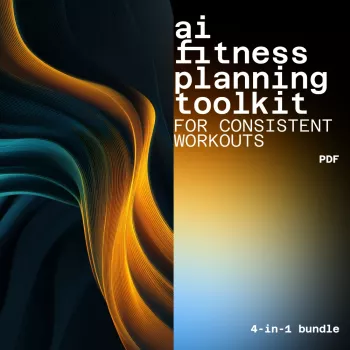
- AI Fitness Planning Toolkit for Consistent Workouts | ai-assisted fitness and exercise planning (USD 319.99) — Designed to structure repeatable training weeks, map workouts to available time, and keep notes/progression organized so the plan can adapt instead of getting abandoned.
- Content That Sells Strategy Toolkit | How to Create a Content Marketing Strategy 3-in-1 Bundle (USD 265.99) — A planning-focused toolkit that pairs well with anyone who sticks to routines better when systems and checklists are clearly laid out.
FAQ
How many days per week are needed to see results?
Three days per week is enough for most people to build strength and improve fitness when sessions are consistent and progressively challenging. Moving to 4–5 days can add training volume and specificity, but the best schedule is the one you can repeat week after week.
Can a plan adapt if only 20–30 minutes are available per workout?
Yes—short full-body sessions work well when time is tight, especially using supersets and prioritizing 1–2 main movements plus a small accessory finisher. Having a pre-written 10–15 minute fallback session also helps maintain momentum on the busiest days.
Is AI-assisted planning a replacement for a trainer?
No; it’s best used as structure and decision support for planning, organizing, and progressing workouts. A qualified trainer is still valuable for coaching technique, accommodating injuries, and providing accountability, while AI-assisted planning can help keep your routine consistent and adaptable.















Leave a comment