Pet-Friendly Furniture Layout: Zones, Flow & Clean-Up Ease
Pet-Friendly Furniture Layout That Still Looks Like “Your” Home
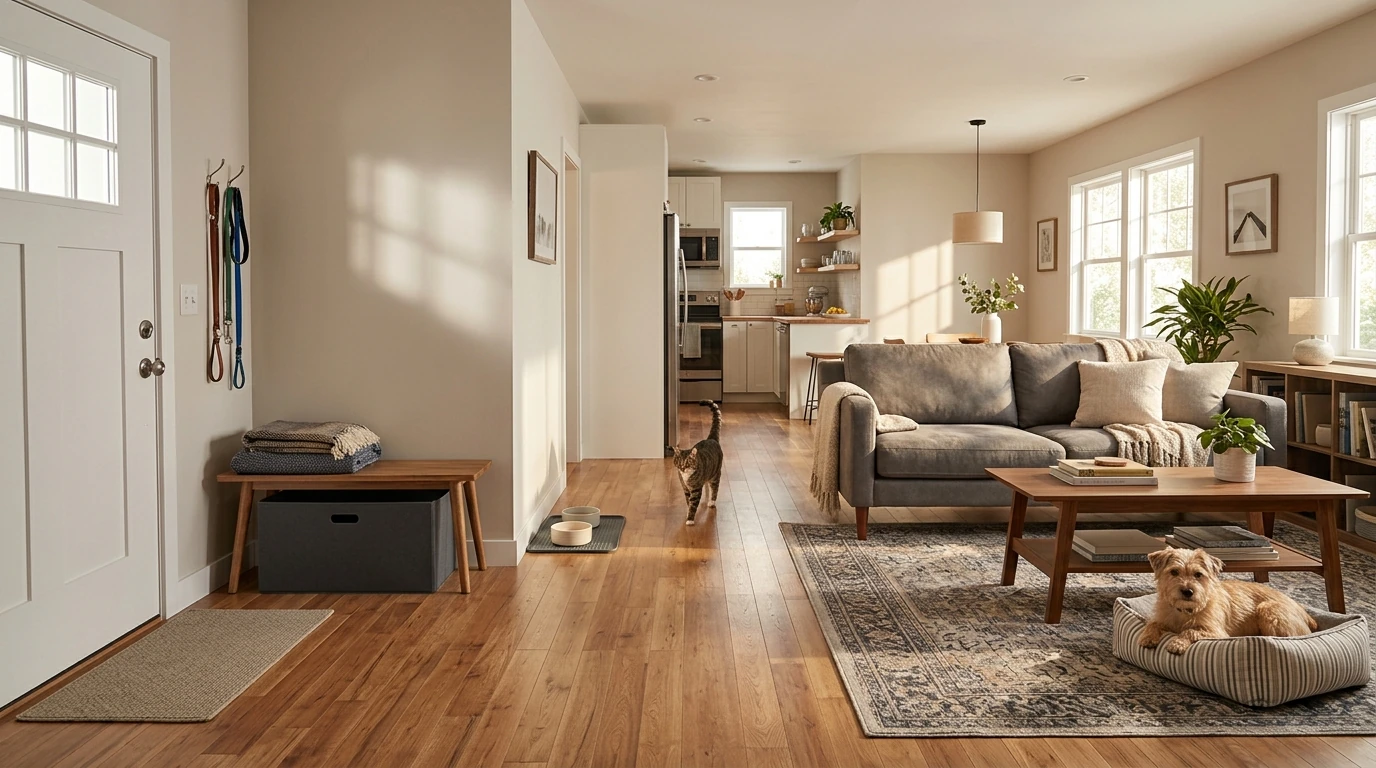
A home can look pulled-together and still function smoothly with shedding, zoomies, litter scatter, muddy paws, and nap-heavy pets. The difference usually isn’t “more cleaning”—it’s smarter placement: clearer paths, cleaner zones, and storage that’s close to where life actually happens. Below is a practical way to organize furniture around real pet behavior (without making the room feel like a kennel), plus a simple option for turning those decisions into a repeatable system with the Pet-Friendly Furniture Layout Bundle: Guides, eBooks & Checklists for Organizing with Pets.
What “Pet-Friendly” Layout Really Means
- Safe paths first: clear runways so pets can move without slipping, colliding with table corners, or launching off unstable surfaces.
- Mess controlled at the source: entry drop zones for leashes and towels, feeding stations that don’t block walkways, and litter areas with containment.
- Furniture protected strategically: placement that reduces fur buildup, scratching angles, and accidental spills—without covering everything in plastic.
- Shared-space balance: cozy pet rest spots that don’t compete with human seating or create constant underfoot traffic.
For safety basics (cords, toxic plants, small objects), it’s worth reviewing general pet-proofing guidance from the ASPCA and home hygiene considerations from the CDC.
Start with Zones: Entry, Feeding, Play, Rest, and Quiet Corners
Instead of trying to make every square foot do everything, give your home a few “job areas.” When zones are clear, clutter naturally drops because items have an obvious home.
- Entry zone: add a washable rug, a hook rail for leashes, and a closed bin for wipes and paw towels within two steps of the door.
- Feeding zone: pick a low-traffic wall or corner; avoid tight hallways and kitchen pinch points where bowls become trip hazards.
- Play zone: preserve open floor space near durable surfaces; move fragile decor and floor lamps away from the “launch area.”
- Rest zone: set a predictable spot near (but not in) the main lane so pets feel included without becoming an obstacle.
- Quiet corner: reserve a calmer nook for anxious pets—especially helpful in apartments, multi-pet homes, or when guests visit.
Traffic-Flow Rules That Reduce Fur, Noise, and Accidents
Traffic flow is where most pet-related chaos starts: tight squeezes, sharp turns, and blocked routes that force pets to “thread the needle.” A few layout rules can change day-to-day comfort fast.
- Maintain clear paths between doorways, couch, and kitchen; don’t force pets between a coffee table and sofa.
- Anchor rugs to prevent sliding, and place them to “connect” seating to exits so pets don’t cut across furniture legs.
- Store frequently used pet items (treats, poop bags, brush) near daily routes to prevent mid-room clutter piles.
- Use furniture edges to guide motion: a console behind a sofa creates a natural lane and reduces corner-cutting scuffs.
- For senior pets: reduce tight turns and jump-requiring shortcuts; align steps/ramps to the most-used furniture approach.
Layout Choices by Pet Type and Behavior
Two homes can have the same furniture and completely different results based on behavior. Make the room work with instincts instead of fighting them.
Quick layout fixes for common pet household problems
| Problem | Likely cause | Layout adjustment | Add-on organizer |
|---|---|---|---|
| Bowl spills in walkways | Feeding station placed in a pass-through | Move bowls to a wall corner; keep 24–36 in clearance from main path | Waterproof mat + nearby towel hook |
| Cat scratches sofa corners | Scratching need not redirected; corners are high-traffic | Place a tall scratching post 6–12 in from the sofa corner on the approach side | Basket for catnip/scratch pad refills |
| Fur collects under seating | Furniture blocks cleaning access | Raise sofa on legs or adjust spacing for vacuum reach; avoid tight clusters | Slim tool caddy stored near living room |
| Pets race and knock decor | No open lane; obstacles force collisions | Create a clear “runway” by shifting coffee table and floor lamps outward | Closed storage for fragile items |
| Litter tracking everywhere | Box placed near main routes; no containment | Relocate to quieter nook; add a longer exit path with mats | Litter supplies in lidded bin |
Materials and Placement That Make Cleaning Easier
Room-by-Room Mini Blueprints
Living room
Bedroom
Home office
Small spaces
Using a Bundle of Guides, eBooks, and Checklists to Lock In the System
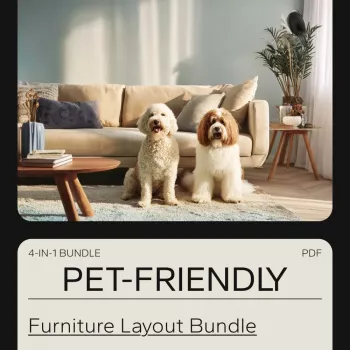
If you want a ready-to-follow plan, start with the Pet-Friendly Furniture Layout Bundle: Guides, eBooks & Checklists for Organizing with Pets. For anyone who also likes building step-by-step systems in other areas of life, two other in-stock digital bundles to browse are Content That Sells Strategy Toolkit | How to Create a Content Marketing Strategy 3-in-1 Bundle and Grow Your Business Step-by-Step: 10-in-1 Bundle for Online Success.
What’s Included in the Pet-Friendly Furniture Layout Bundle
FAQ
How do pets affect furniture placement in small spaces?
Small spaces need stronger zoning and cleaner traffic flow: keep a clear runway, place feeding/litter away from pinch points, and use vertical storage to reduce floor clutter. Also leave enough access for quick vacuuming and wiping, since tight clusters trap fur and debris.
Where should a dog bed go in the living room?
Place it near the seating area so your dog can rest close to the household, but keep it outside the main walking path to reduce tripping and constant stepping-around. Avoid drafts from doors or direct HVAC airflow, and keep the spot consistent so your dog doesn’t default to high-traffic areas.
What’s the easiest way to reduce litter tracking with layout changes?
Move the litter box away from main routes and create a longer “exit path” using layered mats so paws shed litter before reaching open floor. Keeping a lidded bin of supplies nearby helps you tidy the area quickly, which prevents scatter from spreading room to room.











Leave a comment