Best Plate Method: Balanced Meal Planner for Beginners + AI
Build Your Best Plate Every Day: A Beginner-Friendly Balanced Diet Planner with AI
Balanced eating gets easier when the decisions are simplified: what to put on the plate, how to plan the week, and how to adapt meals to preferences and schedules. A practical “best plate” method helps beginners create meals that feel satisfying, familiar, and repeatable—without complicated rules or perfectionism. And when life gets busy, an AI-assisted planning flow can turn good intentions into a routine you can actually follow.
If you like having a clear template (instead of strict dieting), the Build Your Best Plate Every Day — Balanced Diet Planner for Beginners with AI (digital download) is designed to guide day-to-day choices with a simple structure you can use at home, at work, or while traveling.
What a “best plate” looks like (simple, flexible, repeatable)
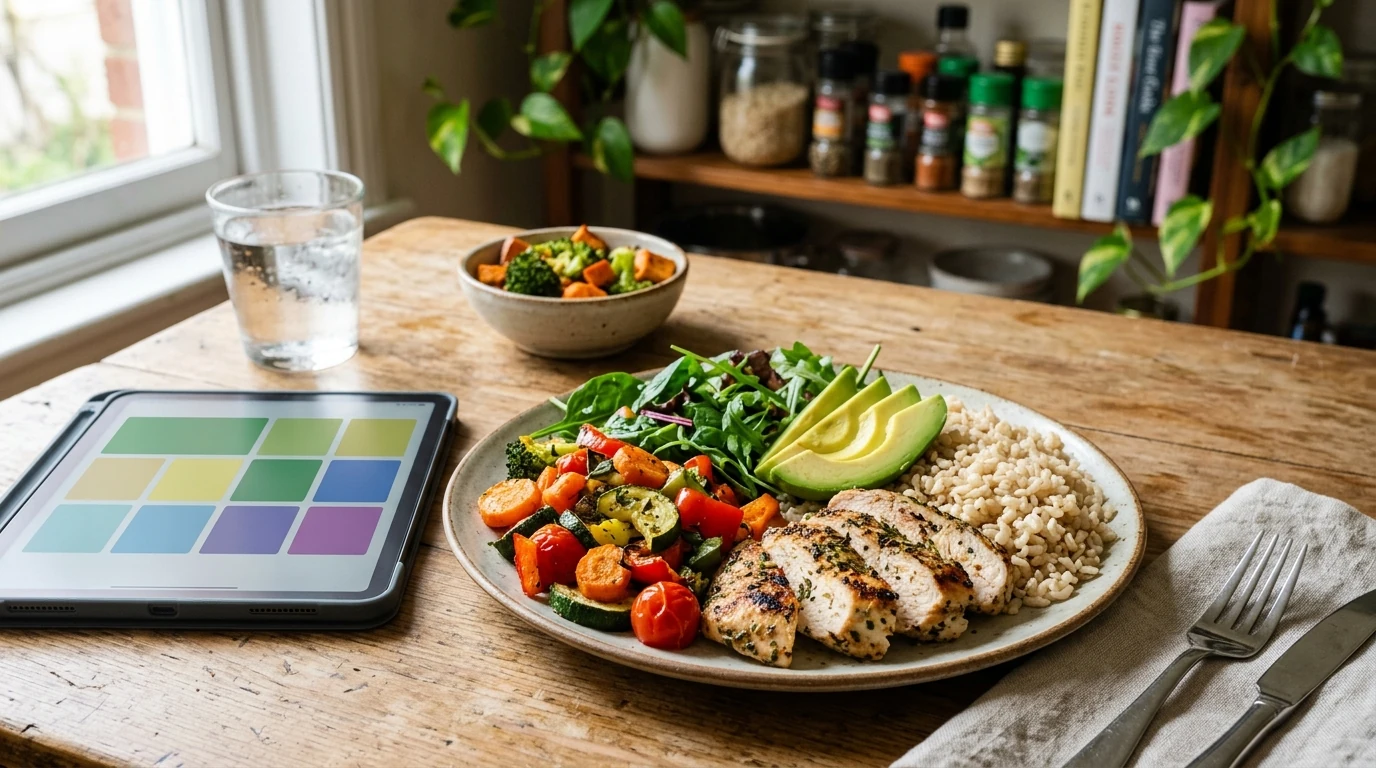
A “best plate” is a consistent meal pattern you can repeat most days—then adjust based on what you like, what’s available, and how hungry you feel. It’s not a single perfect meal. It’s a framework.
- Build most meals around three anchors: protein, high-fiber carbs (or starchy vegetables), and colorful produce.
- Add a source of healthy fat to improve fullness and support nutrient absorption (especially for fat-soluble vitamins).
- Use portion cues (hand-sized estimates) when counting grams or calories feels overwhelming.
- Aim for consistency across the week rather than a “perfect” day.
For additional reference, you can compare this approach to the plate visuals from USDA MyPlate and the Harvard Healthy Eating Plate.
Beginner plate template: the easiest way to balance meals
When in doubt, use this template as your default:
- Half the plate: non-starchy vegetables and/or fruit (aim for a variety of colors).
- One quarter: protein (beans, fish, poultry, tofu, eggs, Greek yogurt, lean meats).
- One quarter: whole grains or starchy vegetables (brown rice, oats, quinoa, potatoes, corn, whole-grain pasta).
- Add: a small portion of healthy fat (olive oil, nuts, seeds, avocado) and water as the default drink.
- Adjust for goals: increase protein and produce for fullness; increase carbs around training; reduce added sugars and ultra-processed snacks.
Quick plate-building guide
| Plate part | Easy options | Beginner tip |
|---|---|---|
| Vegetables & fruit (about 1/2) | salad mix, broccoli, peppers, berries, apples, frozen veg | Keep frozen veggies and fruit on hand for “no-prep” meals |
| Protein (about 1/4) | chicken, tuna, lentils, tofu, eggs, cottage cheese | Batch-cook 2 proteins weekly to mix-and-match |
| Whole grains/starchy veg (about 1/4) | brown rice, oats, quinoa, potatoes, whole-grain bread | Choose one main carb per meal to keep planning simple |
| Healthy fats (small add-on) | olive oil, nuts, seeds, avocado, tahini | Measure once, then eyeball to avoid accidental “fat creep” |
How to plan a week of meals without getting stuck
The fastest way to make balanced eating feel automatic is to reduce the number of decisions you make. A simple weekly rotation works better than constantly hunting for “new healthy recipes.”
- Pick repeats on purpose: choose 2–3 breakfast options, 2–3 lunch options, and 3–4 dinners, then repeat them.
- Use plug-and-play components: a protein, a grain/starch, and two vegetables that can be remixed into bowls, wraps, salads, and plates.
- Schedule relief nights: one leftover night and one quick-assembly night (rotisserie chicken, bagged salad, microwavable grains).
- Write a short shopping list from the template: proteins, produce, grains/starches, fats, plus flavor boosters (spices, salsa, yogurt sauces).
A practical example: cook chicken thighs and lentils, make a pot of rice or roast potatoes, stock frozen broccoli and peppers, and keep a salad kit around. With those basics, you can build multiple “best plates” all week with minimal extra cooking.
Using AI support to personalize meals (without overcomplicating it)
AI is most helpful when it works inside your real-life constraints. The goal isn’t endless options—it’s a short list of meals you’ll actually eat, with easy variations so you don’t get bored.
If you’re looking for a ready-made structure with guided prompts you can reuse, the Build Your Best Plate Every Day — Balanced Diet Planner for Beginners with AI (digital download) organizes the process into a repeatable flow so you spend less time thinking and more time eating well.
What’s inside the digital planner and how to use it day-to-day
Optional: if you’re also building educational content or a wellness brand and want help organizing messaging and content themes, the Content That Sells Strategy Toolkit | How to Create a Content Marketing Strategy 3-in-1 Bundle can support the planning side of consistent publishing.
Who this planner is best for (and who may need a different approach)
General healthy-diet guidance is also available from the World Health Organization.
FAQ
Is this planner suitable for weight loss?
Balanced plates can support weight goals by improving satiety and making choices more consistent from day to day. Results still depend on portions, overall intake, activity, and individual needs, so it helps to use the template consistently and adjust portions gradually based on progress.
How does the AI part work if the product is a digital download?
The download includes guidance plus ready-to-use templates you can copy into an AI tool to generate meal ideas that match your preferences, budget, time, and ingredient constraints. You stay in control of what the plan includes, and you can keep outputs simple and realistic.
What if there’s no time to cook most days?
Rely on quick-assembly meals, batch-cook one protein and one grain, and use frozen produce to cut prep time. A rotating list of 5–7 default meals (plus leftovers and pantry-based options) makes balanced eating possible even on hectic weeks.














Leave a comment