Dog Behavior Toolkit 4-in-1: Decode & Train Smarter

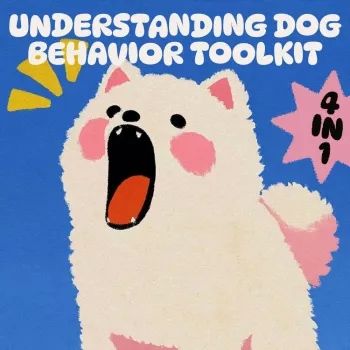
Understanding Dog Behavior Toolkit – 4-in-1 Bundle: A Practical System for Clearer Communication
Dog behavior gets easier to manage when signals, triggers, and reinforcement are treated like one connected system—not a pile of random tips. The Understanding Dog Behavior Toolkit – 4-in-1 Bundle is designed as a structured, repeatable toolkit for decoding common behaviors, building consistent routines, and practicing training responses that reduce confusion for both dog and handler.
Instead of asking, “Why is my dog being stubborn?” the toolkit helps shift the question to, “What happened right before the behavior, what exactly did the dog do, and what happened afterward?” That single shift can unlock clearer communication and faster progress.
What a “behavior toolkit” helps solve day to day
Most households don’t need more advice—they need a way to organize what they’re seeing and respond consistently. A behavior toolkit supports everyday problem-solving by turning chaotic moments into patterns you can track and change.
- Turns confusing moments (barking, pulling, ignoring cues) into observable patterns: antecedent → behavior → consequence.
- Helps separate fear, frustration, excitement, and learned habits so the response matches the cause.
- Creates consistency across household members with shared rules, cues, and reward timing.
- Supports proactive management, preventing rehearsal of unwanted behaviors while training is still in progress.
- Improves communication by pairing body-language reading with clear, repeatable responses.
For guidance aligned with humane, evidence-based training, credible organizations like the American Veterinary Society of Animal Behavior (AVSAB) emphasize reward-based approaches and minimizing fear and anxiety in training plans.
What’s inside the 4-in-1 bundle and how each part is used
Think of this bundle as a practical workflow you can repeat: observe → plan → train → review. Each component supports one part of that loop, and the best results typically come from using them together rather than in isolation.
1) Foundational behavior guide
This piece covers the “why” behind behavior change: reinforcement, thresholds, triggers, and arousal levels. It helps clarify why a dog may respond perfectly at home yet struggle outside (different distractions, different thresholds, different reinforcement history).
2) Body-language and signals reference
Many “out of nowhere” reactions are preceded by subtle signals. A clear reference can help you spot early stress signs before they escalate. The American Kennel Club’s canine body language guide is also a useful companion for learning common expressions and postures.
3) Training and routine planner
This component focuses on consistency: step-by-step practice blocks, household checklists, and simple routines that reduce uncertainty. When everyone uses the same cue, the same reward timing, and the same “plan B,” dogs learn faster.
4) Troubleshooting playbook
Common issues like reactivity, jumping, chewing, and separation-related behaviors are broken down into practical next steps—what to manage immediately, what to train next, and what to track so you can measure progress.
Quick behavior decoding: common signs and what they often mean
Behavior “labels” can hide the real driver. A dog that barks may be scared, over-excited, or repeating a habit that used to work. Reading context is key.
Behavior snapshot guide
| What’s happening | Common signals | Likely driver | Helpful first response |
|---|---|---|---|
| Leash reactivity | Stiff body, hard stare, lunging, barking | Fear, frustration, barrier tension | Increase distance, reward calm look-aways, avoid tight leash |
| Jumping on people | Springing up, pawing, face seeking | Greeting excitement, attention-seeking | Turn away, reward four paws on floor, teach alternate cue |
| Chewing household items | Seeking fabrics/wood, repeated mouthiness | Teething, boredom, stress, unmet chew needs | Provide legal chews, manage access, reinforce calm settling |
| Ignoring cues | Looking away, slow response, wandering | Distraction, low reinforcement, unclear cue | Reduce distractions, shorten sessions, improve reward timing |
| Separation-related distress | Pacing, vocalizing, destructiveness when alone | Anxiety, isolation distress | Gradual alone-time training, enrichment, professional support as needed |
A simple 14-day routine using the toolkit
If you want a broader “systems” approach to planning (beyond dog training), the Content That Sells Strategy Toolkit | How to Create a Content Marketing Strategy 3-in-1 Bundle is another structured digital toolkit focused on step-by-step implementation—useful for households that like checklists and repeatable workflows.
Training style that fits most households
For additional general guidance on training and behavior, the ASPCA’s dog behavior and training resources offer helpful overviews that pair well with consistent tracking.
When to bring in professional help
Bundle details and who it’s best for
The Understanding Dog Behavior Toolkit – 4-in-1 Bundle is built for guardians who want a structured framework instead of scattered advice. It’s especially helpful for first-time dog households establishing routines, as well as multi-person households where consistency is the difference between “it works” and “it doesn’t.”
If your household also relies on done-for-you digital guides for other routines, the Summer Skincare Secrets Bundle | 3-in-1 Digital Guides for a Summer Skincare Routine is another option designed around simple steps and consistent habits.
FAQ
Is this bundle suitable for puppies as well as adult dogs?
Yes. For puppies, it supports routines, management, bite inhibition practice, and early socialization planning; for adult dogs, it’s useful for habit changes, confidence building, and structured work on challenges like reactivity.
How long does it usually take to see behavior changes?
Small improvements can show up in days when management reduces rehearsal and rewards are timed well, but more established behaviors often take weeks to months. Progress depends on the dog’s history, consistency, trigger exposure, and how carefully difficulty is adjusted.
Can the toolkit help with leash reactivity and barking at other dogs?
It can help by tracking threshold distance, identifying triggers, reinforcing calm behaviors, and building a gradual exposure plan supported by management. For high-intensity reactions, aggression, or safety concerns, professional guidance is recommended.















Leave a comment