Scandi Retro Wooden TV Stand Guide: Size, Storage, Style
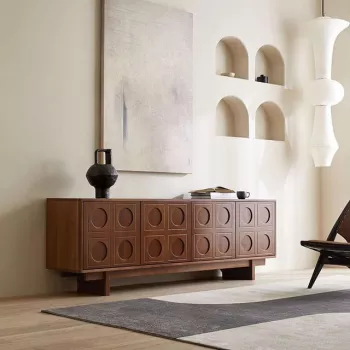
Scandinavian-Style Retro Wooden TV Stand: Warm Minimalism for a Cleaner Living Room
A Scandinavian-style retro wooden TV stand blends calm lines with mid-century character, helping screens and cables feel less dominant in the room. With the right proportions and storage layout, it can make a media area feel intentional—more like furniture and less like “the TV corner.” Below are practical ways to choose a stand that fits the space, supports your tech, and complements a light, wood-forward interior.
What makes Scandinavian retro feel right at home
Scandi-retro pieces earn their place by looking lighter than a typical media console while still feeling warm and grounded.
- Clean silhouettes with tapered legs and warm wood tones create a quieter visual footprint than bulky, floor-to-ceiling cabinets.
- Retro details—rounded corners, slatted or framed doors, and subtle hardware—add personality without turning the room busy.
- Neutral finishes pair easily with wool textiles, matte ceramics, and simple wall art, so the TV zone doesn’t fight the rest of the décor.
- Open space under the cabinet helps the room feel larger and makes vacuuming and sweeping easier.
Sizing for the room and the screen
Proportion does a lot of the heavy lifting. A stand that’s too small can look top-heavy; one that’s too deep can eat walking space.
- Balance the width: a wider base often looks steadier and leaves breathing room for speakers or a small décor moment.
- Confirm viewing height: for everyday comfort, the TV’s center should land close to seated eye level.
- Measure depth: account for wide TV feet, a soundbar, or console-style speakers, and leave clearance behind for cable bends.
- Protect walkways: keep enough space to pass without bumping corners—especially in narrow living rooms or apartments.
Quick measuring checklist before buying
| Measure | Why it matters | What to check |
|---|---|---|
| TV width | Keeps the setup visually balanced | Stand width equal to or greater than the TV’s footprint |
| TV base depth | Prevents overhang and wobble | Stand depth supports TV feet or pedestal base |
| Viewing height | Reduces neck strain | TV center near seated eye level |
| Cable clearance | Avoids pinched cords and heat buildup | Space behind and ventilation around devices |
| Storage needs | Prevents clutter creep | Room for consoles, routers, remotes, and games |
Storage that stays calm, not chaotic
Scandinavian rooms feel restful because the visual “noise” is reduced. Storage choices make or break that effect near a screen.
- Closed storage (doors or drawers) hides chargers, controllers, manuals, and spare cables so the room reads clean at a glance.
- Open shelving can be useful for devices that run warm; add a basket or a low box to keep small accessories from scattering.
- Cord pass-throughs and a practical back panel layout help route power strips neatly rather than letting wires drape down the wall.
- Soundbar planning: confirm shelf spacing or top width so audio isn’t blocked by a lip, door frame, or décor.
Materials and build details worth checking
Retro-inspired design is timeless, but construction quality determines how well it holds up to daily use.
- Solid wood vs. veneer vs. engineered wood: each has different durability and care needs. Match your choice to traffic level, kids/pets, and how often the top surface is used.
- Support matters: stable leg construction and solid center support help prevent sagging—especially under larger TVs and heavier components.
- Finish quality: a well-applied finish resists rings and scratches better. Coasters and felt pads protect the top from cups, lamps, and décor.
- Fit-and-finish clues: smooth drawer slides and well-aligned doors tend to signal better everyday usability.
Styling ideas: keep it retro, keep it airy
A few restrained choices keep the TV wall from feeling crowded while still looking styled.
Setup tips: stability, cables, and everyday ease
- Level the stand: doors and drawers work best when the cabinet is even. Use felt pads or shims if the floor is slightly uneven.
- Bundle cords: hook-and-loop ties keep cable runs tidy, and mounting a power strip to the back can lift plugs off the floor.
- Ventilation is protection: leave breathing room for consoles and streaming devices; heat buildup can shorten device life. ENERGY STAR also emphasizes efficient, well-ventilated electronics setups (ENERGY STAR).
- Kid/pet safety: consider anchoring the stand and keep heavy items centered and low. For tip-over prevention guidance, see the Consumer Product Safety Commission (CPSC).
Spotlight: Scandinavian-Style Retro Wooden TV Stand
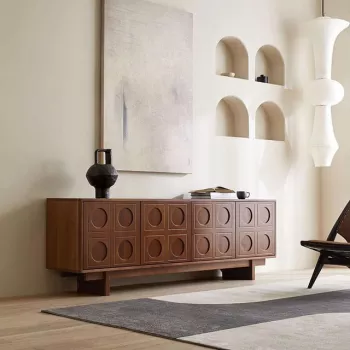
If the goal is warm minimalism with just enough vintage character, the Scandinavian-Style Retro Wooden TV Stand is designed to complement light, clean interiors while keeping the media wall looking composed. It works well as a focal point without overpowering the room, and it’s ideal for organizing living-room essentials while keeping the surface up top visually calm. Available now while inventory lasts.
Also available (in stock)
- Content That Sells Strategy Toolkit | How to Create a Content Marketing Strategy 3-in-1 Bundle (digital bundle)
- Grow Your Business Step-by-Step: 10-in-1 Bundle for Online Success (digital bundle)
FAQ
How wide should a TV stand be compared to the TV?
Aim for a stand that’s at least as wide as the TV’s footprint, and often a bit wider for better visual balance. Extra width also helps if you’re adding a soundbar or speakers.
Is closed storage better than open shelving for a Scandinavian look?
Closed storage usually fits the Scandinavian look best because it hides cables and small accessories. Open shelving can be reserved for devices that need airflow and easy access.
How can cables be hidden without blocking ventilation?
Use rear pass-through openings, mount a power strip behind the unit, and bundle cords neatly with ties. Leave open space around consoles and streaming devices so heat can escape.











Leave a comment