AI Travel Concierge: Personalized Itineraries That Fit You

Your AI-Powered Travel Concierge for Personalized Trip Recommendations
Planning a trip is easier when suggestions match the way you actually travel—your budget, pace, interests, and constraints. An AI-powered travel concierge helps turn scattered ideas into a clear plan by recommending routes, experiences, and daily schedules that fit your preferences, while keeping flexibility for last-minute changes. Instead of starting with generic “top 10” lists, you start with your real-world details and end with a plan that feels usable.
What an AI travel concierge does (and what it doesn’t)
An AI travel concierge is best thought of as a planning companion that organizes options and proposes itineraries based on what you tell it. It can quickly narrow choices and produce a structured plan that’s easier to tweak than a blank page.
- Collects preferences such as destination type, trip length, budget range, travel style, accessibility needs, and must-do activities
- Generates tailored recommendations for neighborhoods, attractions, restaurants, and day-by-day pacing
- Helps compare options quickly (e.g., “culture-heavy weekend” vs “relaxed food-focused itinerary”)
- Doesn’t replace official booking policies, entry requirements, or real-time safety guidance—those should be verified with primary sources
Before you commit to bookings, double-check critical details with authoritative sources like the U.S. Department of State, the UK Foreign travel advice, and the IATA Travel Centre.
Personalization inputs that lead to better recommendations
Better inputs lead to better outputs. The fastest way to get useful recommendations is to share specifics that affect what you can realistically do each day.
- Trip basics: dates, number of travelers, home airport/city, and desired trip duration
- Budget boundaries: target nightly lodging cost, daily food spend, and activity budget
- Pace and priorities: early starts vs late nights, maximum walking time, downtime needs, and “one big highlight per day” vs packed schedules
- Interests: food, museums, hikes, nightlife, shopping, beaches, architecture, kid-friendly stops, or hidden-gem exploration
- Constraints: dietary restrictions, mobility needs, weather tolerance, and “must-avoid” items (crowds, long drives, stairs, etc.)
Quick preference checklist to share with an AI concierge
| Category | Examples to specify | Why it matters |
|---|---|---|
| Budget | Lodging cap, daily spend, splurge nights | Prevents recommendations that don’t fit |
| Pace | Relaxed/moderate/packed, walking limit | Improves day-by-day flow |
| Interests | Food, nature, culture, shopping, nightlife | Prioritizes the right experiences |
| Constraints | Diet, mobility, kid-friendly, time windows | Avoids unusable options |
| Style | Boutique vs chain hotels, local spots vs landmarks | Aligns with the vibe you want |
How recommendations turn into a workable itinerary
Great recommendations still need structure. The most usable itineraries follow a few simple rules that reduce friction during the day.
- Start with a theme: “food-first city break,” “nature and scenic drives,” or “family-friendly highlights”
- Use geographic clustering: group activities by neighborhood/area to reduce transit time
- Balance anchors and flexibility: plan 1–2 fixed items per day and leave room for spontaneous finds
- Add timing logic: opening hours, peak crowd windows, and travel time buffers
- Create backups: rainy-day swaps, low-energy alternatives, and nearby options if a venue is full
A practical example: instead of scheduling three “must-sees” across town, cluster them into one walkable area, place the hardest-to-get reservation as your anchor, then fill the gaps with nearby, lower-commitment stops.
Common travel scenarios where an AI concierge helps most
Some trips benefit disproportionately from a concierge-style workflow—especially when time, budget, or group dynamics get complicated.
- Last-minute trips: fast shortlisting of “best fit” areas to stay and the top experiences for limited time
- Multi-city planning: route order suggestions, overnight allocation, and transit tradeoffs
- Group travel: merging preferences and proposing compromises (e.g., alternating activity types)
- Budget-sensitive planning: surfacing free/low-cost options and prioritizing value activities
- Repeat destinations: focusing on new neighborhoods and experiences beyond the usual highlights
What to look for in a travel concierge tool
Your AI-Powered Travel Concierge – how it fits into trip planning
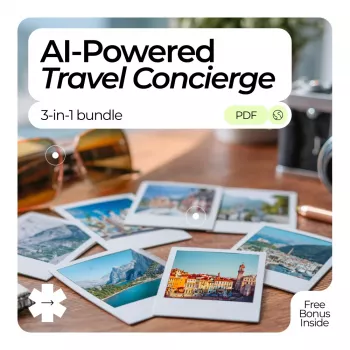
Your AI-Powered Travel Concierge – AI for Personalized Travel Recommendations is designed to help travelers move from broad preferences to personalized travel recommendations and structured plans. It’s especially useful for building day-by-day ideas, refining priorities, and creating a practical shortlist before booking—so you spend less time juggling tabs and more time making decisions.
Where it helps in the planning timeline
| Planning stage | What to decide | How a concierge-style AI can assist |
|---|---|---|
| Inspiration | Destination type and theme | Suggests places aligned to interests and seasonality |
| Shortlisting | Where to stay and what to do | Recommends neighborhoods and top experiences by preference |
| Scheduling | Day-by-day plan | Builds a paced itinerary with clustered stops and buffers |
| Refining | Backups and tradeoffs | Offers alternatives for weather, crowds, and budget changes |
If you also create travel content or run a travel-related storefront, pairing trip planning with a clearer marketing system can help. Two related resources to consider are the Content That Sells Strategy Toolkit and Grow Your Business Step-by-Step: 10-in-1 Bundle for Online Success.
Smart checks before booking anything
FAQ
How detailed should a personalized itinerary be?
A flexible structure works best: plan 1–2 anchors per day, cluster nearby stops, add realistic transit buffers, and keep backup options. Longer trips can use broader blocks (morning/afternoon/evening), while short trips often benefit from tighter timing.
Can an AI travel concierge plan trips for families or groups with different interests?
Yes—start with shared constraints (budget, mobility needs, nap times, reservation windows), then rotate priorities so each person gets a “highlight” block. Keep common anchors like meals and headline sights, and add optional split-up activities when interests diverge.
How can travelers verify that recommendations are accurate and up to date?
Confirm details with primary sources: venue websites for hours and ticketing, transit agencies for schedules, and government travel advisories for entry and safety updates. Re-check the day before (or day of) visits to catch closures and last-minute changes.















Leave a comment