Calm Holiday Menu Planning: Feast, Dinner, or Potluck
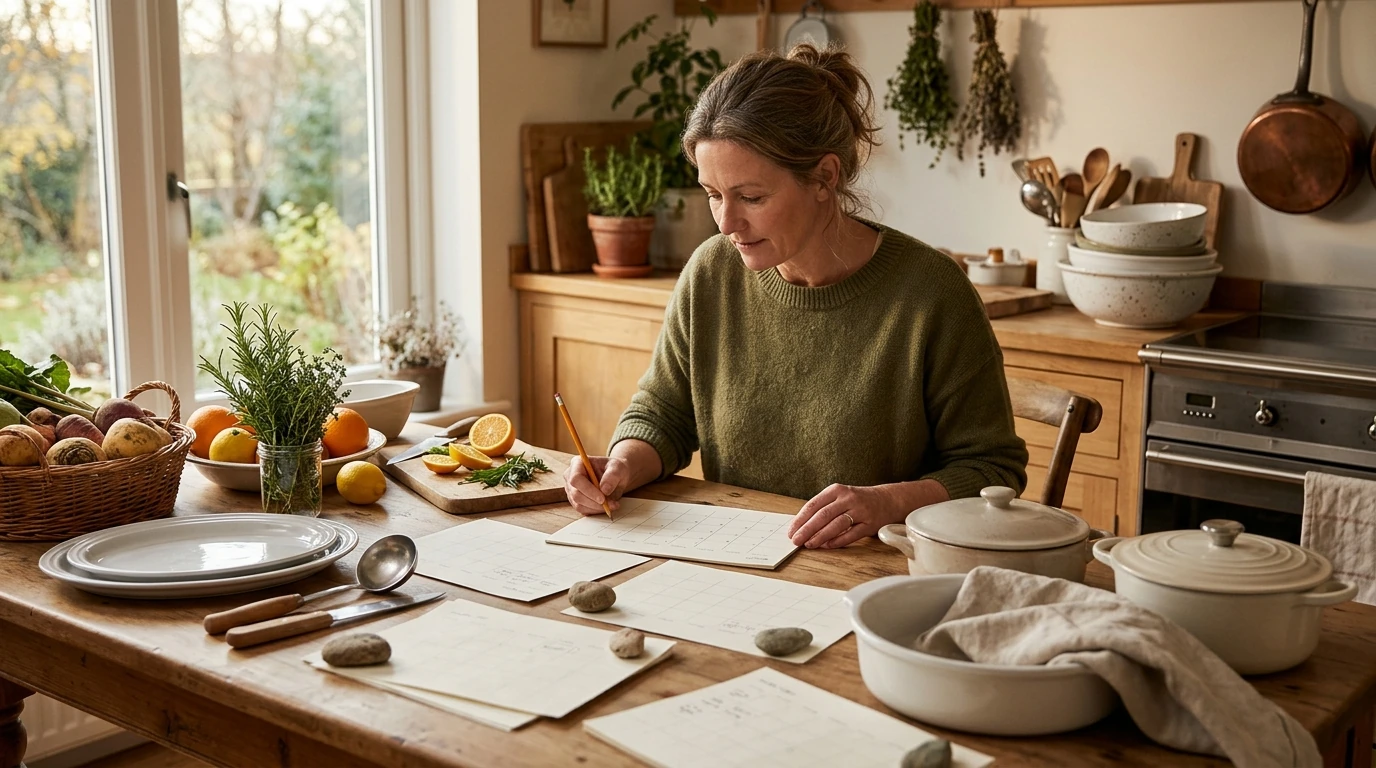
Holiday Menu Planning That Stays Calm: How to Use a 3-in-1 System for Feasts, Dinners, and Potlucks
Holiday hosting gets easier when the menu, timeline, and responsibilities are organized from the start. A structured planning system reduces last-minute decisions, balances dishes across courses, and keeps prep realistic for the kitchen space and time available. With a 3-part menu system, you can plan a big holiday feast, a smaller sit-down dinner, or a coordinated potluck—while keeping shopping, prep, and serving smooth.
If you want a ready-made framework you can reuse year after year, the Holiday Menu System for Easy Planning: 3-in-1 Bundle – Feasting, Dinner, & Potluck Guides keeps everything in one place: menu flow, assignments, and a realistic timeline that fits your kitchen.
What this 3-in-1 planning bundle helps solve
- Turns a vague “holiday meal” into a complete menu with a clear flow: starters, mains, sides, desserts, and drinks.
- Prevents common pitfalls: too many oven dishes, duplicate sides, missing vegetarian options, and timing conflicts.
- Supports different hosting formats: a full feast, a smaller dinner, and a potluck where guests contribute.
- Builds a repeatable process you can reuse for multiple holidays, birthdays, and special events.
Choose the right format: feast, dinner, or potluck
The fastest way to feel in control is choosing the format that matches your biggest constraint (space, time, or contributors) instead of the “ideal” menu you wish you could pull off.
Feasting plan
Best for larger groups and celebratory spreads. The focus is variety, pacing, and serving logistics—so guests can graze and the kitchen doesn’t lock up right at serving time.
Dinner plan
Best for smaller gatherings. It prioritizes a tight menu, fewer moving parts, and clean timing. Think: one main, a few sides, one fresh element, and dessert—done well.
Potluck plan
Best when guests contribute. It prioritizes coordination, assignment clarity, and safe transport/holding so dishes arrive ready and the table still makes sense.
| If your biggest constraint is… | Best format | Why it works | Planning focus |
|---|---|---|---|
| Limited oven and burners | Dinner | Fewer hot dishes and simplified timing | One main + 2–3 sides |
| Large guest count | Feasting | Variety scales better than a single plated menu | Stations, serving order |
| Limited prep time | Potluck | Work is distributed across guests | Assignments and deadlines |
| Dietary variety needed | Potluck or Feasting | More dishes makes accommodations easier | Labels and options |
Build a balanced menu that serves well
A balanced holiday menu isn’t about adding more dishes—it’s about choosing dishes that play different roles and don’t compete for the same equipment.
- Start with the anchor: one main (or two mains if guest count is high or dietary needs demand it).
- Add contrast: include at least one fresh/crisp dish to balance rich items (salad, slaw, citrus, pickles).
- Avoid “same texture” overload: mix creamy, crunchy, roasted, and saucy elements.
- Plan for dietary needs early: include at least one substantial vegetarian option and one gluten-free-friendly side.
- Limit oven dependence: mix stovetop, oven, slow-cooker, and make-ahead cold dishes.
- Dessert strategy: choose one showpiece plus one low-effort backup (cookies, bars, or store-bought with an easy garnish).
Turn the menu into a realistic timeline
Menus fail when the timing is imaginary. Work backward from serving time and schedule the tasks people forget: table setup, final reheats, carving/resting, and getting serving pieces where they need to be.
| When | Tasks to schedule | Notes |
|---|---|---|
| Day -2 to -1 | Shop shelf-stable + pantry, confirm guest count and dietary needs | Buy backups: extra butter, foil, parchment |
| Day -1 morning | Chop veg, prep sauces/dressings, brine or season proteins | Label containers for quick assembly |
| Day -1 afternoon | Bake desserts, par-cook sides, set up serving platters | Assign fridge zones by course |
| Day 0 morning | Cook mains (slow roast) or start long-cook dishes, set table | Keep one burner free for emergencies |
| Day 0 last 90 min | Reheat sides, finish salads, warm bread, carve/rest | Hold hot foods safely and cover to retain heat |
Potluck coordination that actually works
For food safety basics—especially for holding temperatures and leftovers—follow the guidance from the USDA Food Safety and Inspection Service and the CDC food safety overview.
Shopping and setup: keep it calm on the day
Using the Holiday Menu System bundle day-to-day
Get the full set here: Holiday Menu System for Easy Planning: 3-in-1 Bundle – Feasting, Dinner, & Potluck Guides.
If you also like planning systems that keep projects organized beyond the holidays, these in-stock digital bundles pair well with a “less chaos, more structure” approach: Content That Sells Strategy Toolkit | How to Create a Content Marketing Strategy 3-in-1 Bundle and Grow Your Business Step-by-Step: 10-in-1 Bundle for Online Success.
Common mistakes and quick fixes
FAQ
How far in advance should the menu be finalized?
For a dinner, finalize 7–10 days ahead; for a feast, aim for 10–14 days; for a potluck, set the plan about 2 weeks out with confirmations 3–5 days before. This leaves time for dietary checks, shopping, and making a realistic prep timeline.
How many dishes are enough for a holiday meal without overdoing it?
A practical baseline is 1 main, 2–4 sides, 1 fresh/crisp item, and 1–2 desserts. For potlucks, keep the host menu smaller and fill the table by categories so the spread feels complete without becoming unmanageable.
What’s the easiest way to prevent duplicate dishes at a potluck?
Assign categories (not recipes), use a shared sign-up list, and set a confirmation deadline 3–5 days before. Include serving-size expectations and require dishes to arrive ready-to-serve whenever possible.













Leave a comment