Sun Protection Habits Made Easy: Checklists & UV Timing

Smart Sun Protection Practices Bundle: Everyday Habits for Safer Time Outdoors
Sun protection works best as a set of small, repeatable habits—before leaving the house, during outdoor time, and after exposure. When routines are simple and consistent, it’s easier to protect skin on quick errands, long practice days, road trips, and beach weekends without relying on memory. Trusted guidance from sources like the CDC and the American Academy of Dermatology supports a layered approach: sunscreen plus protective clothing, shade, and smart timing.
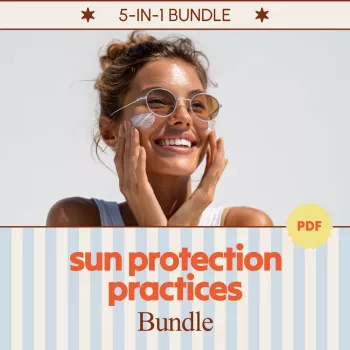
If you like having checklists and quick-reference pages ready on your phone, the Smart Sun Protection Practices Bundle | Sun Protection Tips 5-in-1 Digital Guides is designed to help turn good intentions into automatic routines that hold up across seasons.
What the Smart Sun Protection Practices Bundle helps organize
The goal is a simple system that makes daily protection feel easy—whether you’re heading out for 15 minutes or spending hours outside.
- A repeatable plan that combines sunscreen, protective clothing, shade, and timing so you’re not trying to remember everything on the fly.
- Quick-reference reminders to check the UV Index and plan around stronger UV periods (temperature and cloud cover can be misleading).
- Step-by-step routines for real life: commuting, workouts, pool/beach days, kids’ activities, and travel.
- Mistake-prevention prompts (reapplication timing, commonly missed areas, expiration dates, and water/sweat factors).
- Printable or saveable pages you can keep on a phone for fast access while packing, restocking, or heading out the door.
Sun protection options and when to use each
| Practice | Best for | How to do it well | Common pitfall to avoid |
|---|---|---|---|
| Broad-spectrum sunscreen (SPF 30+) | Daily errands, driving, outdoor meals | Apply generously to exposed skin; reapply at least every 2 hours and after swimming/sweating | Using too little or applying only once in the morning |
| UPF clothing + wide-brim hat | Long outdoor blocks, sports, hiking, outdoor work | Choose tightly woven/UPF-rated items; cover shoulders, neck, and scalp | Assuming a baseball cap protects ears and neck |
| Shade planning | Parks, beaches, sidelines, outdoor events | Use umbrellas, trees, pop-up tents; take shade breaks during peak UV | Staying in partial shade while still getting reflected UV from sand/water |
| Sunglasses with UV protection | Daily exposure, water/snow environments | Look for UV400 or 100% UVA/UVB; wear consistently | Fashion lenses without UV protection |
| Timing + UV Index check | Trip planning, midday events | Shift activities earlier/later; increase protection on high UV days | Relying on temperature or cloud cover as a UV indicator |
Build a “leave-the-house” sun-safe routine
Make sun protection the same kind of autopilot as grabbing your keys. The best routine is the one you’ll actually repeat.
- Set a default minimum: protect face, neck, ears, and hands whenever you expect daylight exposure—even for short trips.
- Create a staging spot: keep sunscreen, SPF lip balm, sunglasses, a hat, and a small mirror by your keys/wallet so nothing gets skipped.
- Use a reapplication cue: a phone timer works, or pair reapplication with meals/snacks so you don’t have to think about timing.
- Place backups where you need them: car, gym bag, stroller caddy, beach tote, and a travel kit (avoid leaving products in extreme heat when possible).
- After sun: cleanse gently, moisturize, and keep an eye on your skin over time for new or changing spots.
Sunscreen fundamentals that make the biggest difference
Most sunscreen “failures” come down to not using enough, missing areas, or forgetting to reapply. Small upgrades in technique can dramatically improve coverage.
- Choose broad-spectrum protection. SPF 30+ is a practical baseline for many everyday outdoor activities.
- Apply enough product. Thin layers underperform—especially on arms, legs, shoulders, and the tops of feet.
- Apply before exposure. Give it time to form an even film; reapply at least every 2 hours and after swimming or heavy sweating.
- Hit the “missed” zones. Ears, back of neck, hairline/scalp part, tops of feet, and around swimsuit lines are easy to overlook.
- Check dates and storage. Heat can degrade formulas; replace products that have separated, changed smell, or passed expiration.
Smarter coverage: clothing, hats, shade, and timing
For long outdoor blocks, layering protection reduces how often you need to rely on perfect sunscreen timing—especially when you’re busy.
For a more complete warm-weather routine beyond sun protection basics (like post-sun skin comfort), the Summer Skincare Secrets Bundle | 3-in-1 Digital Guides for a Summer Skincare Routine can pair well with a daily protection checklist.
Scenario checklists for busy days
Beach or pool days
Sports and sweating
High altitude and snow
Kids and families
Sensitive or acne-prone skin
Common mistakes and easy fixes
Making the habit stick with digital guides
For additional background on UV exposure and why protection matters year-round, the World Health Organization offers a helpful overview.
FAQ
How often should sunscreen be reapplied during a typical outdoor day?
A practical baseline is at least every 2 hours. Reapply sooner after swimming, heavy sweating, or towel-drying, and make sure you’re using enough product each time—set a timer if needed.
Is sun protection still necessary on cloudy days or in the shade?
Yes. UV can penetrate clouds, and it can reflect off surfaces like water, sand, concrete, and snow—so shade alone isn’t complete protection. Check the UV Index and layer shade, clothing, and sunscreen for better coverage.
What’s the easiest sun protection routine to follow for everyday errands?
Use a minimal default: broad-spectrum SPF on face/neck/ears/hands, plus UV-protective sunglasses and a hat. Keep a small sunscreen in your bag or car for quick touch-ups when errands run long.















Leave a comment